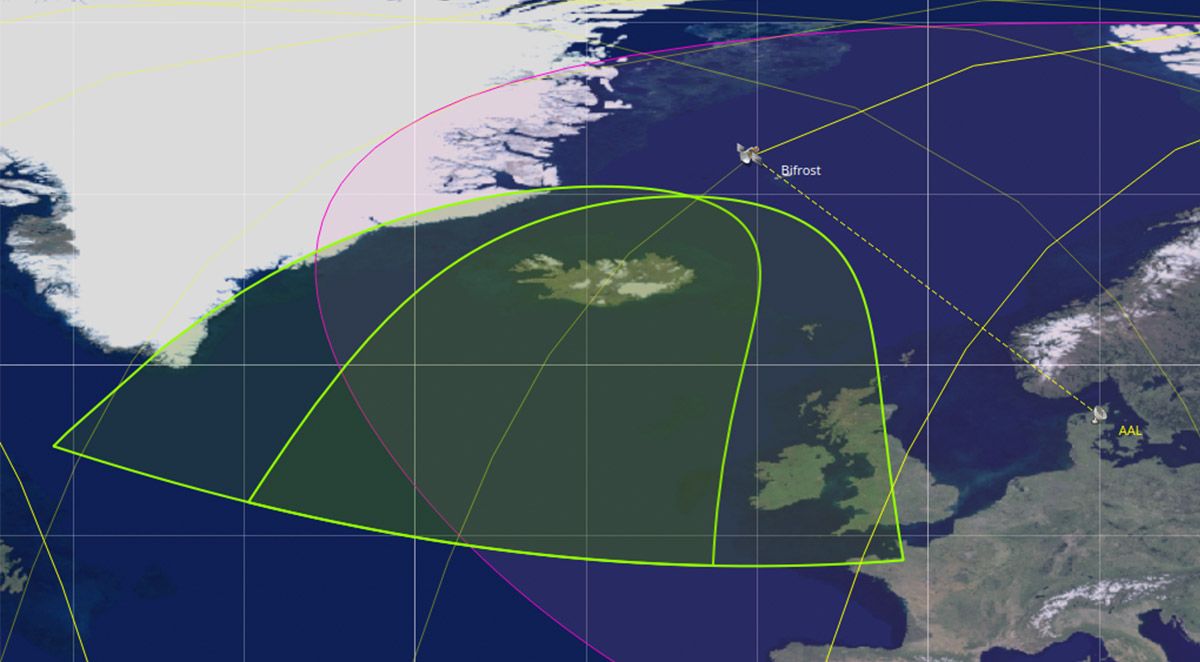

The first CubeSat to carry a wind-measuring interferometer
Thermospheric winds are one of the largest unmeasured variables in upper-atmosphere science, yet they can significantly affect orbiting satellites, disrupting GPS and radio communications. NASA’s Decadal Survey highlights that closing this gap is one of its top priorities for the decade. And although the instrument that can close it already exists, we haven’t yet managed to fly it on anything small. That instrument is a limb-viewing Fabry-Perot interferometer. It measures thermospheric winds by detecting the Doppler shift of the 630 nm oxygen emission line at around 250 km altitude. Detecting something that faint has always demanded a large, exceptionally stable platform. WindCube changes that, thanks to the platform that will carry it. |
Why a CubeSat?
Thermospheric winds vary across both space and time, so a single satellite, however capable, only delivers single-point measurements. What the science actually requires is many sensors observing at once - something that’s only viable if each unit is cheaper to build and launch than a full-size, flagship satellite. That’s why we’re building a CubeSat: lower in cost, quicker to build, and ultimately, easier to scale into constellations.
It’s a platform problem, not an instrument problem
The science requirement - 5 m/s accuracy on the retrieved wind speed - converts directly into a stability requirement on the spacecraft. The platform has to hold a stable limb-viewing geometry continuously as it moves through its orbit. A pointing wobble or a thermal drift not only degrades the measurement but makes the 5 m/s retrieval impossible.
Existing CubeSat’s aren’t designed to solve these constraints - they’re actually the constraints that have kept this instrument on full-size satellites for decades. So the engineering question for WindCube was never "can a CubeSat carry this instrument?" It was "can a CubeSat platform be made stable enough that the instrument still hits 5 m/s accuracy?"
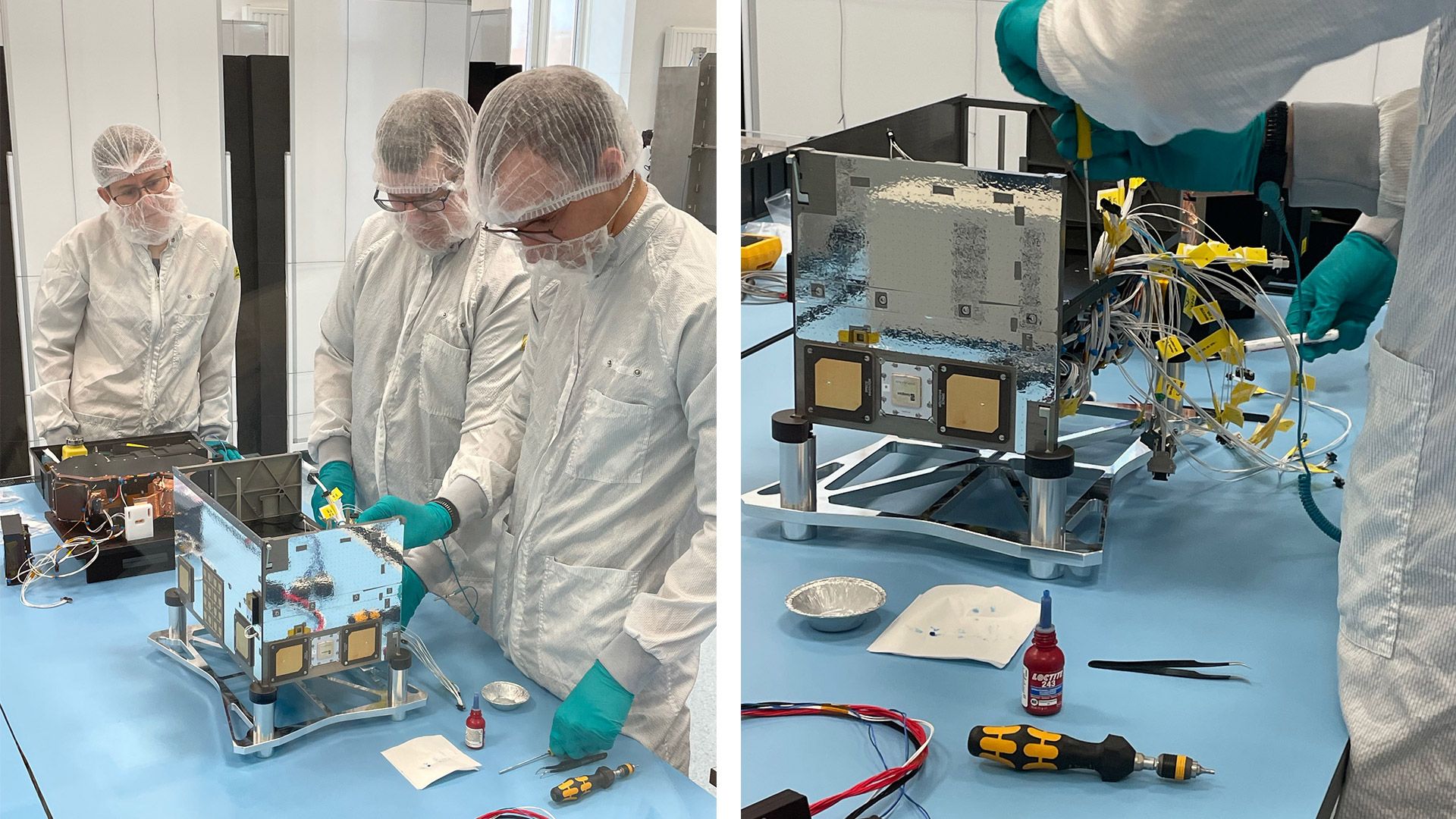
What we built
A completely new 12U platform designed specifically for the WindCube mission, rather than adapted from heritage hardware. Every major design decision is driven by the mission’s specific requirements.
We're completing spacecraft and payload integration, plus full testing, at our headquarters in Aalborg, Denmark. Our team will also run the Launch and Early Operations Phase (LEOP) and operate the satellite for the full mission duration. The mission is led by UCAR's High Altitude Observatory, backed by $6.5M from NASA's Heliophysics programme, and launches in December 2026.
What it means
The first payoff is straightforward: closing the long-standing observational gap of thermospheric wind, at a more economical cost. But the longer-term payoff matters even more. Since the platform is low-cost and repeatable, it can be built in numbers – it’s constellations of these sensors that will move observation from single-point measurements to global coverage of the upper-atmosphere wind field.
There is also a wider point, for those planning a mission with a demanding payload - the most important question to ask is whether a platform has been designed around what the instrument needs to perform, or whether it has been built for something else. On WindCube, the instrument and its requirements set the design; our spacecraft is built to meet them.
Popular articles